Last updated: October 2026
Buying for a coffee lover looks easy until you open their cupboard and find three brewers, a bag of beans they are very particular about and a mug they refuse to replace. A coffee gift can still land beautifully. The trick is working out which part of their routine they actually enjoy, because that is rarely the part you would guess from the outside.
Some people love the ritual of making it, the grinding and the pouring and the two quiet minutes before anyone else is up. Others want the result without the ceremony, or they want to take a decent cup to work, or they have fallen down the espresso rabbit hole and now need a very specific 54 mm accessory. Matching the gift to that interest is what separates a present they use daily from one that goes in the cupboard with the others.
For Australian gift buyers, this guide brings together 30 gifts for coffee lovers across every part of the routine: stovetop and pour-over brewers, cold brew for summer, grinders, scales and kettles, espresso tools for the home barista, travel mugs, beans, storage and a couple of books worth reading. There are ideas for a first proper brewer, a serious upgrade and the small accessory that fixes an irritation they have stopped noticing.

Few objects say coffee quite as clearly as the little silver pot on the stove. Water goes in the bottom, ground coffee sits in the basket and heat does the rest, pushing a strong, aromatic brew up into the top chamber. There is no pump, no power cord and nothing to update. For someone whose kitchen is already crowded, that simplicity is the appeal, and the three-cup size produces concentrated servings rather than a full breakfast pot.
It makes a particularly good gift for a person who enjoys the sound and smell of coffee being made, not just the drinking of it. The classic shape also looks the part left out on the bench. Check that it suits their stovetop before buying, then consider pairing it with a bag of beans or a pair of small espresso cups to turn a useful present into a complete one.
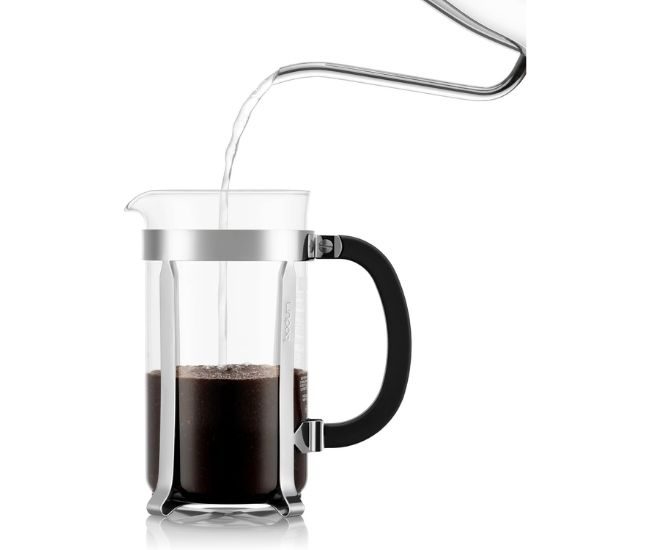
A French press is the most forgiving way to make genuinely good coffee, which makes it a safe gift even for someone still finding their preferences. Coarse grounds steep in hot water for around four minutes, then the mesh plunger separates them out. Because nothing is filtered through paper, more of the coffee's oils reach the cup and the result has a fuller, rounder character than a filter brew.
The one-litre size is the point here. It serves two or more people, which suits households where the first cup is never the last and makes it a natural housewarming or wedding present. The glass body and polished metal frame look at home on a breakfast table rather than hidden in a cupboard. For a solo drinker who only ever wants one cup, one of the single-serve brewers further down this guide is the better match.
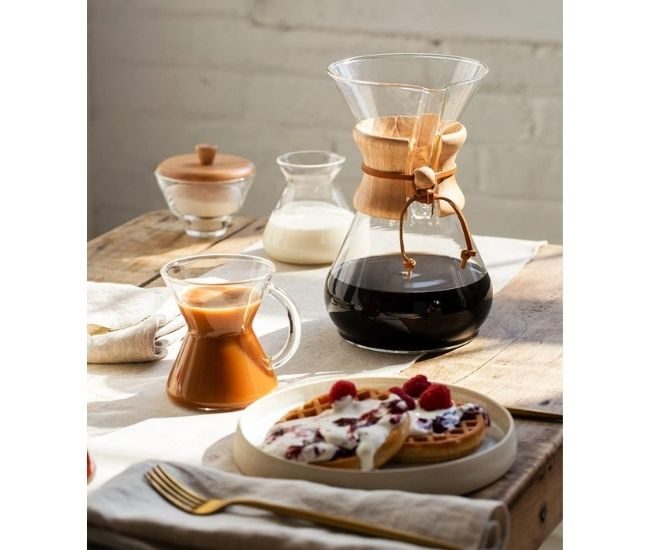
Some coffee makers are a pleasure to look at even when nobody is brewing. This hourglass-shaped glass vessel, with its wooden collar for a grip, is one of them. Coffee is brewed by pouring hot water slowly through a paper filter of grounds, and because the paper catches the oils, the cup comes out clean and clear with the lighter, brighter notes of the beans easy to pick out.
It is a thoughtful present for someone who appreciates a well-designed object as much as a well-made coffee, and the six-cup capacity means they can brew for visitors. Worth knowing before you buy: it needs compatible paper filters, so adding a box alongside it makes the gift ready to use on the day. Anyone who would rather not think about filters at all may prefer the French press above.

This is one brewer that behaves like two. Close the switch at the base and the coffee steeps in the water like a tea, which is remarkably forgiving of an imprecise pour. Open it and the brew drains into the cup below. Leave the switch open from the start and it works as a conventional pour-over. The person choosing gets to decide how much attention the morning deserves.
That makes it an excellent gift for a tinkerer: the same beans can be brewed two different ways in the same device and compared side by side. A starter pack of size 02 filters is included, so it can be used straight away. It suits someone who already enjoys filter coffee and wants a new variable to play with, rather than a beginner looking for the simplest possible routine.

Cold brew is the method where patience does the work. Coarse grounds sit in cold water in the fridge overnight, and by morning the coffee is made. The long, cool steep produces something smoother and less sharp than hot coffee poured over ice, and the removable mesh basket means the grounds lift straight out rather than needing to be strained.
For an iced-coffee regular, this quietly removes a daily decision. It is a genuinely practical present in an Australian summer, and the one-litre jug holds enough for several servings over ice or with milk. It also leaves plenty of room to experiment, since changing the beans or the steeping time noticeably shifts the result. Pair it with the bag of beans later in this guide if you want the gift to be usable the night they open it.
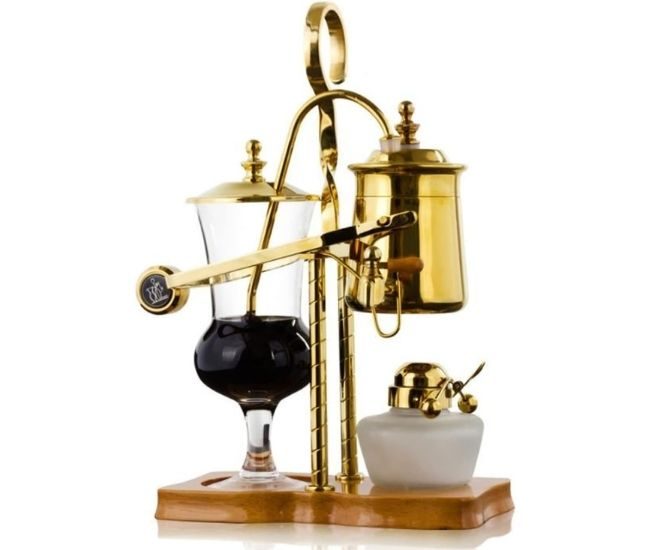
This is the most theatrical coffee maker in the guide and makes no apology for it. Heat the water in one chamber, and pressure sends it across into the vessel of coffee; as it cools, the balance tips and the finished brew is drawn back through a filter. The whole process happens in full view, which is the point. It belongs to the Victorian era of brewing, when coffee equipment was expected to look like laboratory apparatus.
Give it to someone who enjoys a ritual with an audience rather than a quick cup before work. It is a conversation piece the rest of the time and a striking thing to leave on a sideboard. One practical note worth checking before the first brew: these brewers need a specific fuel for the burner, so confirm what the listing includes and what needs to be bought separately.
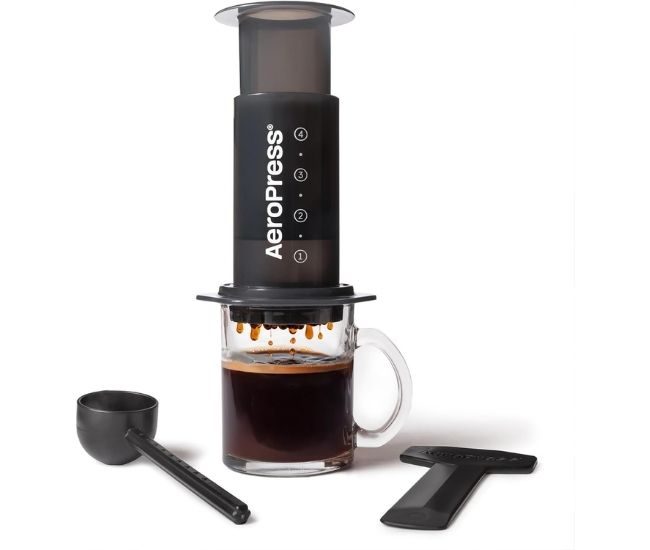
Not everyone wants a brewing setup that occupies a corner of the kitchen. This compact press makes a single cup by steeping the grounds briefly and then pushing them through a filter, so the whole business takes a couple of minutes and leaves almost nothing to wash up. It is hands-on enough to feel like making coffee rather than dispensing it, which is exactly what a lot of coffee drinkers are missing at work.
It also rewards curiosity. Adjust the grind, the water temperature, the steep time or the dose and the flavour shifts noticeably, so a keen brewer can keep refining a favourite recipe while a beginner can start simple. The small size suits a desk drawer, a suitcase or a camping box. It is not an espresso machine and does not pretend to be one; its strength is control in a very small package.
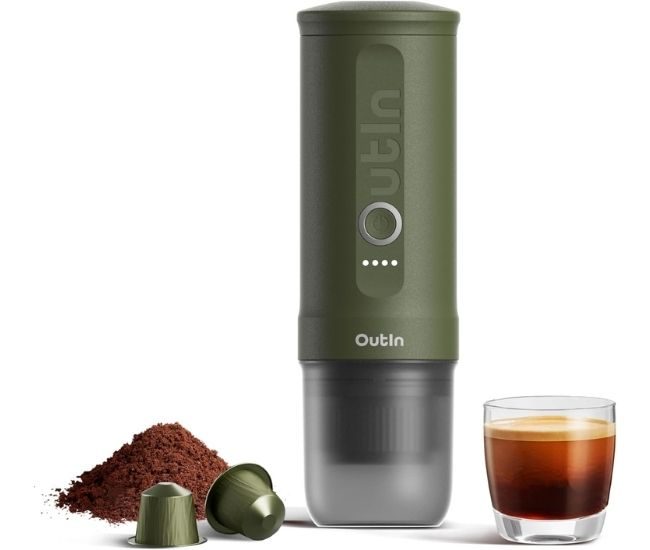
Most portable espresso makers rely on hot water being available. This one heats the water itself, which changes where it can go: a campsite, a car, a hotel room or an office with nothing but a tap. Press to brew and it produces a fresh small shot wherever it happens to be, which is a very different proposition from carrying a thermos of something made hours ago.
It accepts ground coffee or compatible capsules, so the recipient can choose between convenience and freshly ground beans depending on the trip. This is a gift for the traveller or camper whose standards do not relax just because they are a long way from a café, and it tends to be remembered long after the trip. Worth checking the charging and capsule details on the listing so the right supplies go in the box with it.

Anyone who can taste yesterday's tea in today's coffee has a stainless travel mug to blame. This one is lined with ceramic instead, which gives a cleaner-tasting sip and does not hold onto the flavour of whatever came before. The insulated 12 oz body keeps the temperature where it should be, and a splash guard behind the twist-on lid makes drinking while walking less of a gamble.
The slim shape is designed to fit most cup holders, which matters more than it sounds for a daily commute. It is a useful present rather than a surprising one, so the cheerful colour does some work in making it feel like a gift. For someone who takes thirty minutes to finish a coffee at a desk rather than drinking it on the move, the temperature-controlled mug below is the better choice.

There is a particular disappointment in making a careful coffee, answering three emails and returning to something lukewarm. This mug sets out to fix exactly that, holding the drink at a chosen temperature so the last mouthful tastes like the first. The temperature is selected through an app, and once a preferred setting is saved it will hold it without the phone needing to be involved every morning.
The 14 oz body runs for around eighty minutes on a charge and sits on a charging coaster between drinks, which makes it best suited to someone with a regular desk rather than someone constantly on the road. It is an indulgent present, and that is rather the point: it solves a small irritation that a slow sipper notices every single day and would never buy a cure for themselves.
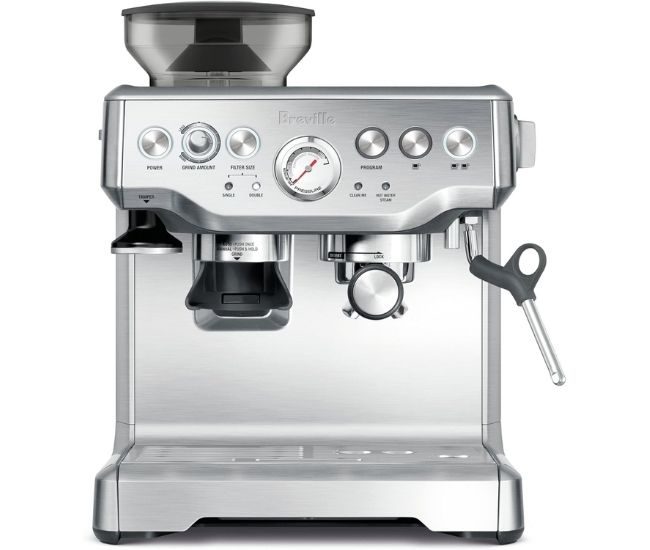
This is the gift for someone who has decided their kitchen bench should become their favourite café. Beans are ground fresh by the built-in burr grinder, dosed into the portafilter and pulled as a shot, and the manual steam wand means milk is textured by hand rather than by a button. Adjustable grind and extraction controls put the important variables within reach instead of hiding them.
That hands-on quality is the appeal and also the commitment. Someone who wants coffee to appear at the press of a button will find it demanding; someone who enjoys learning a craft will spend months happily getting better at it. As a significant present it has an unusual advantage, in that it gets used every morning rather than admired occasionally. Pairing it with a scale, a milk jug or a bag of beans makes the first week considerably easier.

If someone owns good beans and a decent brewer but still has inconsistent results, the grinder is usually the reason. Burrs crush beans to a far more even size than blades chop them, and even grounds extract evenly, which is most of what separates a muddled cup from a clear one. This is the least glamorous upgrade on the list and quite possibly the one most worth making.
It adjusts from fine espresso through to coarser filter grinds, so it suits a household that switches between a machine in the morning and a pour-over at the weekend. A simple hopper adjustment and pulse control keep day-to-day use straightforward, and a quick-release burr makes the cleaning that everyone postpones a little less annoying. For someone who brews away from a power socket, the hand grinder below is the better fit.

Grinding by hand sounds like a chore until you watch someone who enjoys it. The steel conical burrs do the same even-grind job as an electric grinder, just with a minute of cranking instead of a motor, and a good many brewers come to see that minute as the best part of the morning. It is adjustable across a range of brewing methods, so the same grinder can serve an espresso basket and a French press.
Needing no power socket is the practical advantage. It goes camping, travels in hand luggage and works on a kitchen bench with no room to spare, which makes it a natural companion to the portable press and the self-heating espresso maker in this guide. For a household grinding a kilo of beans a month, an electric grinder will be less work; for one person who likes doing things properly, this is the nicer object.
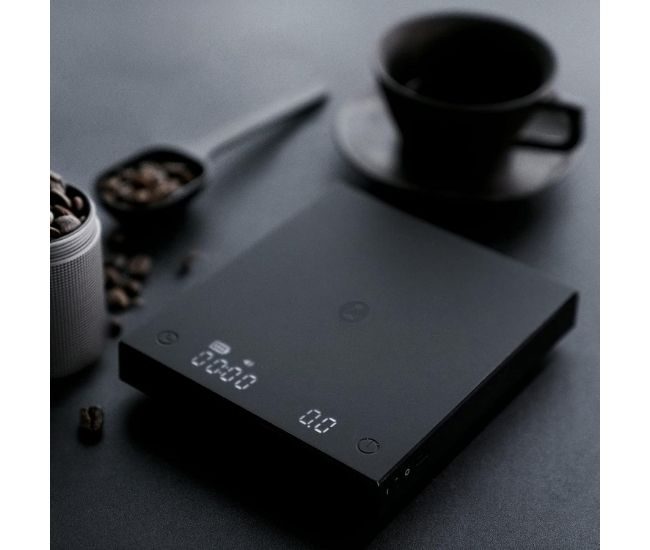
The quickest way to repeat a brilliant coffee is to stop guessing how much coffee and water went into it. This scale weighs both, times the brew and displays the rate the water is being poured, which turns a vague routine into something that can be written down and done again. It sounds fussy right up until the first time someone makes an excellent cup and cannot work out why.
The flow-rate display is particularly useful for pour-over, where pouring too fast is the most common unforced error. It works just as well for weighing an espresso dose and the shot that comes out of it, so it is not limited to filter coffee. This is a present for the brewer who likes a little data with their caffeine, and it is a genuinely cheap way to improve results from equipment they already own.

A narrow, curved spout is the difference between pouring water on coffee and placing it where you want it. For pour-over brewing that control matters: a slow, even stream wets the grounds consistently, and consistency is most of the recipe. Anyone who has tried to brew a careful filter coffee from a standard household kettle will understand the appeal within one pour.
This version sits on the stovetop rather than needing its own base and power cord, which keeps one more appliance off the bench and looks considerably better doing it. The 1.2-litre capacity is generous enough for brewing more than one cup. It makes a thoughtful upgrade for a pour-over devotee, and it pairs neatly with the glass brewer and the switchable dripper earlier in this guide. Check it suits their stovetop first.

Coffee is mostly water, which is the part almost everyone ignores. These measured mineral packs are mixed into distilled or reverse-osmosis water to build a brewing water with a known composition, so the minerals that affect how flavour is extracted are the same every time rather than whatever came out of the tap that week.
This is unmistakably a gift for the advanced hobbyist: someone who has the grinder, the scale and the technique sorted and is looking for the next variable. The real pleasure in it is the side-by-side tasting, brewing the same beans with two different waters and discovering how much changes. The listed yield covers plenty of repeat experiments. For anyone not already deep in the subject, the scale or the grinder will be far more welcome.
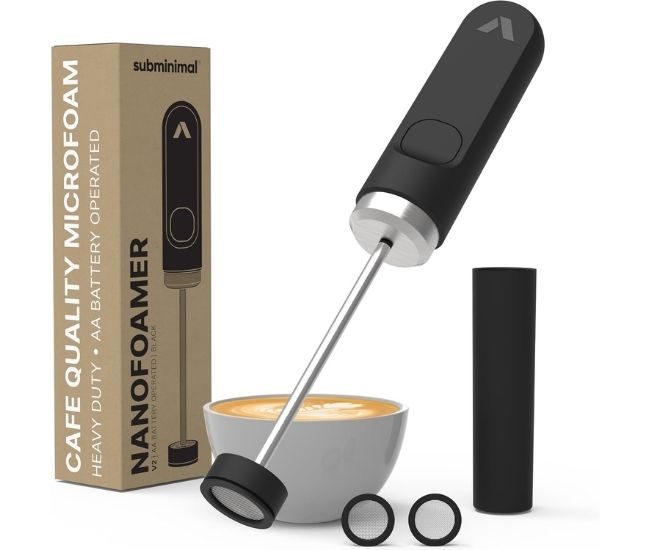
Most homemade flat whites are let down by the milk. Big, soapy bubbles sit on top instead of the fine, glossy microfoam that pours properly, and no amount of good espresso underneath will fix it. This rechargeable handheld wand gives milk texture a serious attempt without buying a machine with a steam wand attached, and the two speeds allow for a gentler start and a firmer finish.
It is a good present for the person whose coffee is nearly there, especially alongside the milk jug below, which gives the milk room to move. Being rechargeable rather than battery-powered means one less thing to remember. It will not fully replicate a steam wand, and it is fairer to frame it as the cheap, cheerful route to better milk than as a substitute for an espresso machine.

The jug is the quiet partner in every nice-looking coffee. A 600 ml stainless pitcher gives milk enough room to swirl properly without threatening to overflow, and the tapered spout is what makes a controlled pour possible at all. Latte art is far more about the shape of the spout and the steadiness of the hand than about any particular talent.
It is useful with a steam wand or with the handheld frother above, which makes it one of the easiest small gifts in this guide to get right. Because it costs so little relative to the rest of a coffee setup, it also works beautifully as the extra item alongside a bigger present, or in a Kris Kringle where the recipient is known to be working on their pour.

Take the spouts off a portafilter and the espresso shot has nowhere to hide. Every flaw in the grind and the puck preparation shows up immediately as a jet shooting sideways or a patch running faster than the rest. It is the single most useful diagnostic tool in home espresso, and the kit includes a basket and preparation extras so it is ready to use.
The honesty is the gift. Someone who has been getting indifferent shots and cannot work out why will learn more in a week with this than in a month of guessing, because the feedback arrives in the cup and on the bench at the same time. Compatibility is the one thing to confirm: it is made for the listed 54 mm machines, so check their model before ordering.

Tamping by hand is harder to do consistently than it looks, and a bed of coffee pressed slightly off level will extract unevenly no matter how good the beans are. A spring-loaded tamper presses to the same depth each time and guides the base flat, which takes one variable out of the morning and removes a convenient excuse along with it.
The 53.3 mm base is sized for compatible 54 mm baskets, so it is worth checking the basket before buying. Different spring resistance options are included, which lets the recipient settle on a pressure that feels right. This is a gift for the troubleshooter, the person who has started wondering why Tuesday's shot was better than Wednesday's, and it works well as part of a small set with the dosing ring and the distribution tool.
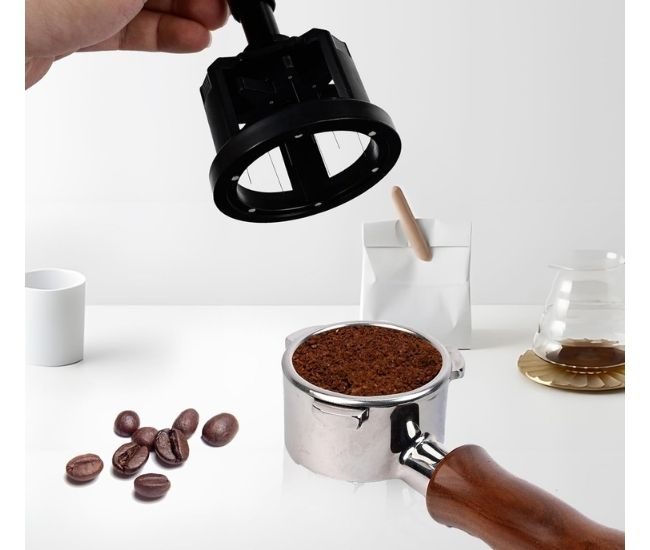
Freshly ground coffee clumps, and clumps create channels for water to rush through, which is why a shot can taste thin even when everything else was measured carefully. This tool lowers a set of fine needles into the grounds and is rotated to break the clumps up and spread the bed evenly before the tamp. It looks like a small laboratory instrument because that is essentially what it is.
The needle height is adjustable and the magnetic base helps park it in the right place, both of which make it pleasant to use rather than fiddly. It is designed for compatible 53 to 54 mm baskets. This is firmly for the person already some way down the espresso rabbit hole, and the satisfying little mechanism is a good part of the reason they will enjoy unwrapping it.

Expensive beans scattered across the bench is a small daily irritation with a very cheap fix. A dosing ring sits on top of the basket and widens the target, so ground coffee lands where it is meant to instead of around the portafilter. Less sweeping up, less waste and a tidier start to every shot, from a piece of metal with no moving parts to go wrong.
The 54 mm format matches the corresponding portafilters, and it lifts on and off in a second, so nothing about the existing routine has to change. On its own it is a modest present, which makes it a natural stocking filler or an add-on to a larger espresso gift. For someone who already owns a machine and seems to have everything, this is the kind of small annoyance they have simply learned to live with.
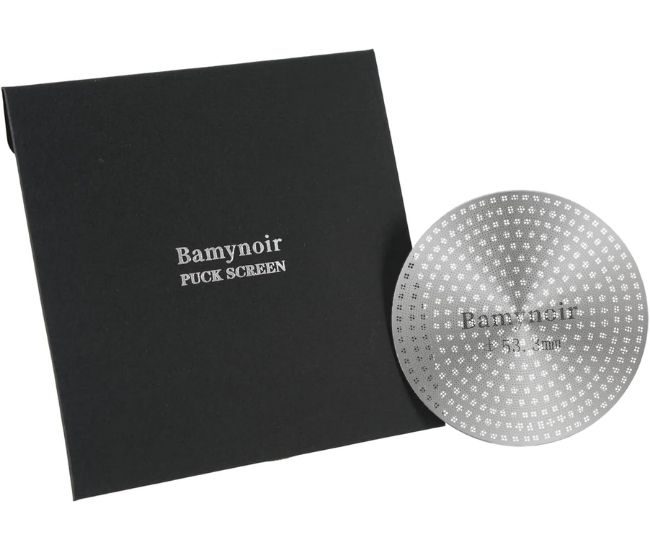
A puck screen is a thin perforated steel disc that sits on top of the coffee before the shot runs. At 0.65 mm it barely changes the height of the basket, and the idea is to spread the incoming water a little more evenly and keep coffee off the group head, which may mean less wiping down between sessions.
At 53.3 mm it is sized for compatible baskets, so it is worth checking that before buying. The honest framing is that opinions differ on how much difference a screen makes, and the fun of it is running the test: a week with, a week without, and a verdict formed from their own shots. As one of the least expensive items in this guide, it makes a neat small present for someone with a large coffee hobby.

Anyone using a bottomless portafilter quickly develops a strange morning habit of crouching beside the machine with their head at bench height to watch the shot. An adjustable mirror sits underneath and brings that view up to eye level, which is both more dignified and considerably easier on the knees.
It matters more than it sounds, because the first seconds of an extraction are the most informative part and they are hard to study from an awkward angle. Seeing where the coffee runs fast tells the brewer what to change next. Compact enough for a home espresso station, it is a clever and inexpensive gift, and it pairs obviously with the bottomless portafilter earlier in this guide for someone just starting to pay attention to their shots.

The used puck is the least charming part of making espresso and the part no gift guide usually bothers with. A knock box turns it into one quick, satisfying tap against the bar, with the spent coffee contained rather than landing in a bin that is not designed for wet grounds. Anyone who has tried to clean that bin will appreciate the difference.
This one holds around ten pucks before it needs emptying, which covers a weekend of enthusiastic brewing, and the knock bar lifts out so the box can actually be washed properly. The compact stainless design is meant to live on the bench. It is an unromantic present that gets used every single day, which makes it a reliable choice for someone who already owns an espresso machine and is hard to surprise.
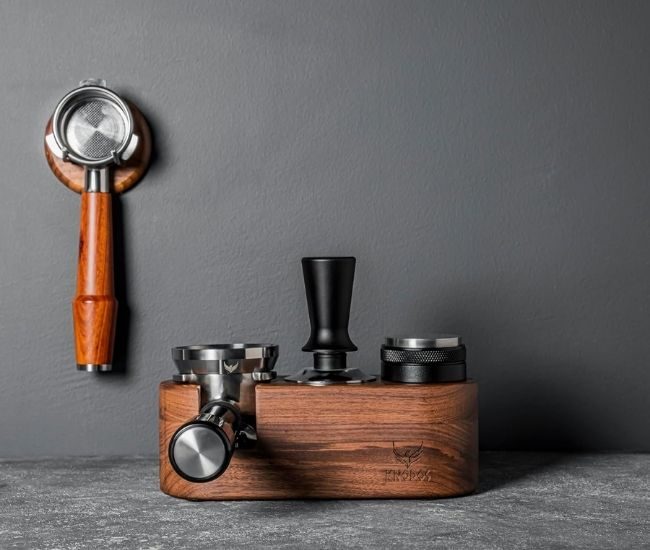
Espresso tools multiply, and they end up scattered along the bench where they are easiest to knock over. This wooden stand gathers a 58 mm setup into one place and, more usefully, holds the portafilter steady while the coffee is tamped, so the press happens straight down rather than at whatever angle a hand resting on the edge of a bench produces.
An adjustable holder accommodates different setups and a non-slip base keeps it where it is put. The warm wooden finish is the other half of the appeal, since a coffee corner that looks considered is part of why people enjoy using it. This suits an established setup rather than a first machine, and it is a good answer for the home barista who already owns the tools and needs somewhere sensible to keep them.

Equipment is only ever half the answer. A whole kilogram of beans is the gift that actually gets drunk, and at that size it keeps a grinder busy for weeks rather than being gone by the weekend. This is a medium roast of 100% arabica, leaning towards fruity and floral notes rather than the dark, smoky profile that dominates a lot of supermarket coffee.
That makes it a good match for someone who has started reading tasting notes and wants something with more character than bitterness. It works across brewing methods, so it suits a household using a machine on weekdays and a filter brewer on Sundays. Whole beans do assume a grinder, so pair it with one of the grinders above if they do not have one yet, and store it in the canister below.

Someone who spends real money on beans and then keeps them in a half-folded bag held shut with a clothes peg is undoing their own work. Air is what turns interesting coffee flat, and this canister twists closed to draw air out of the container, which helps protect the beans in the fortnight between opening the bag and reaching the bottom of it.
The 1.2-litre capacity swallows a decent bag of beans with room to spare, and the clean white finish suits a coffee station where everything else is stainless and glass. It is a practical rather than exciting present on its own, which is why it works so well sitting next to a bag of good beans. For a household that goes through a kilo quickly, this is the part of their setup most likely to be missing.

For the person who reads the origin on the bag before they open it, this is a far better present than another mug. The updated third edition covers coffee-growing regions in detail, connecting the beans in the cup with the places, altitudes, varieties and processing methods behind them, so a name on a label stops being decoration and starts meaning something.
It is a book made for browsing rather than reading end to end, which makes it a natural thing to leave out where other people pick it up and ask questions. It also works beautifully alongside a bag of single-origin coffee, since looking up where it came from while drinking it is most of the pleasure. For someone wanting to improve their brewing technique rather than their geography, the home-brewing guide below is the better fit.

There is a common point in a coffee hobby where someone owns the equipment and still cannot explain why one day's cup is better than the next. This guide is aimed squarely at that person. It works through grinders, the common brewing methods and the variables that actually move the flavour, in the order someone standing in their own kitchen would need them.
It also covers espresso and café-style drinks, so it is useful whether they brew filter coffee or are learning to pull shots, and it is the sort of book that gets picked up repeatedly rather than read once. As a gift it has a quiet advantage over more gear: it tends to improve the results from everything they already own. Pair it with a bag of beans and it becomes a weekend project rather than just a book.
Watch what they already choose to do. Someone who grinds beans by hand while the kettle boils enjoys the making, so a brewer, a kettle or a grinder will be welcome. Someone who drinks the same thing every day at the same desk wants the drinking improved, which points to a better mug or beans with more character. A person who talks about extraction and dialling in is after a tool, not a new brewing method. Buying for the part they enjoy is more important than buying the most impressive item.
This is where most coffee gifts go wrong. Espresso accessories are sized to the basket, and 53 mm, 54 mm and 58 mm fittings are not interchangeable. Tampers, dosing rings, puck screens, portafilters and tamping stations all need to match the machine they already own, so check the model first and read the compatibility list on the product page. If you cannot find out discreetly, choose something that fits any setup, such as beans, a scale, a milk jug or a book.
A grind-to-cup espresso machine needs bench space, a power point and someone willing to learn it. A hand grinder and a single-cup press need a drawer and two minutes. Both make excellent presents, but for different people. Think about whether they will enjoy a new routine or resent one, and be honest about whether the gift asks for more attention in the morning than they have to spare. Enthusiasm for a hobby is not the same as time for it.
Beans, filters and mineral packs get used and remembered fondly, and they are hard to get wrong. Equipment lasts for years but risks duplicating what they own. One good approach is to pair them: a bag of beans alongside a canister, a glass brewer with a box of compatible filters, or a scale with a book on brewing. The consumable makes the gift usable the day they open it, which matters more than people expect.
For gifts being delivered in Australia, check the retailer's current delivery estimate, seller details and total cost before committing to a present for a particular date. Confirm the version and size shown on the listing, and look for anything needed before the first use: paper filters for a pour-over brewer, fuel for a siphon, distilled water for mineral packs, or a grinder for whole beans. Stovetop brewers and kettles should also be checked against the cooktop they will be used on.
Looking for something else to suit the way they like to start the day? These collections are useful places to continue the search:
Look at the parts of the routine people tend to neglect rather than buying another brewer. Bean storage, a brewing scale, a knock box, a puck screen or a set of water minerals all improve a setup that already looks complete. Consumables are the other reliable answer, because a kilo of good beans is welcome no matter how much equipment is already on the bench. If they own several brewers, something that makes the existing ones work better is a safer bet than a fourth one.
There are several genuinely good options at that level. A 600 ml milk jug or a dosing ring costs very little and gets used daily. A cold brew pot, a knock box, a digital brewing scale or a bag of whole beans all sit in the same range. Our gifts under $20 guide is worth a look if the budget is tighter again.
A burr grinder, almost always. Blades chop beans into uneven pieces that extract at different rates, which muddles the cup no matter how good the beans or the brewer are. Burrs produce a far more even grind, and grinding immediately before brewing matters too. After that, a scale for repeatable measurements and fresher beans are the next two steps. New brewing equipment tends to be more exciting and less effective than fixing the grind.
Only if you know the machine. Baskets come in different sizes, and a tamper, portafilter, dosing ring or puck screen bought for the wrong one simply will not fit. Check the model and the basket size first, then read the compatibility details on the listing. If that is not possible, choose something size-independent: beans, a milk jug, a scale, a travel mug or one of the books in this guide will suit any setup.
Plenty of excellent coffee happens without one. A moka pot makes a strong, concentrated brew on the stovetop, a French press is the most forgiving method there is, and a glass pour-over brewer or switchable dripper produces a cleaner, brighter cup. For a single serving, the portable press needs nothing but hot water. None of these need a machine, a power point or much bench space.
You can explore every idea in this guide through its individual Unique Gift Ideas product page, then follow the retailer link to check the current offer. The Kitchen collection and Food collection are both useful starting points for more. Check delivery to your Australian address and the estimated arrival date, particularly when ordering for a birthday, Father's Day or Christmas.
The best coffee gift fits the part of the ritual they already love. For one person that is a stovetop pot filling the kitchen with the smell of the first brew of the day. For another it is a mirror that lets them watch an espresso shot without crouching, or a kilo of beans that keeps the grinder busy for a month. The most expensive option is not automatically the most thoughtful one.
Work out whether they enjoy making coffee or drinking it, check what machine they own before buying anything sized to it, and consider adding something they can use the same day. Whether you settle on a moka pot, a hand grinder, a travel mug or a very small steel disc that sits on top of a coffee puck, knowing a little about how they brew goes a long way.
Explore more clever, creative and giftable finds at UniqueGiftIdeas.com.au.