
Last updated: October 2026
Buying for someone who camps is harder than it looks, because the good campers already own the obvious things. The tent is sorted, the chair is sorted, and the thing they actually grumble about on every trip is something you have never heard them mention. That is where the genuinely good presents hide.
It also depends enormously on how they camp. Driving to a site with a boot full of gear is a completely different activity from carrying everything on your back, and a gift that delights one would irritate the other. Weight matters to a hiker and barely registers for a caravanner, while space in the car matters to both.
For Australian gift buyers, this guide brings together 37 camping gifts across every part of a trip: tents and off-ground beds, mattresses and sleeping bags, chairs, lighting, the camp kitchen, water and cooling, power and solar, tools, and the small cheap things that fix an irritation they stopped noticing years ago. There are ideas for a first-time camper, a serious upgrade, and the person who appears to own everything already.

There is a particular argument that happens at dusk in a car park, with a bag of poles on the ground and a diagram nobody can read. This tent removes it. You throw it down, spread the pole and it opens in about three seconds, which means the tent is up before the esky is out of the boot.
Inside you get 290 x 200 cm, enough for a queen air mattress or two adults with their gear, and a porch to keep boots out of the sleeping space. The fabric carries a 2000 mm waterproof rating with taped seams, so it handles real weather rather than just a passing shower. Folding it back down takes a knack, so a practice run in the backyard is worth the ten minutes.

Almost everything unpleasant about sleeping outdoors happens at ground level. Water runs underneath you, roots find your spine, cold comes up through the mat and things move across the groundsheet at three in the morning. Lifting the bed off the ground solves all of it at once, which is a bigger upgrade than any amount of padding.
This is a cot and a tent as one setup, arriving in two bags. Sixteen aluminium legs and four frame poles make it noticeably steadier than a typical camp stretcher, and two height settings let you sit it low on firm ground or high on wet ground with storage underneath. It sleeps one, so a couple would need a pair, and it suits driving to a site rather than carrying it far.
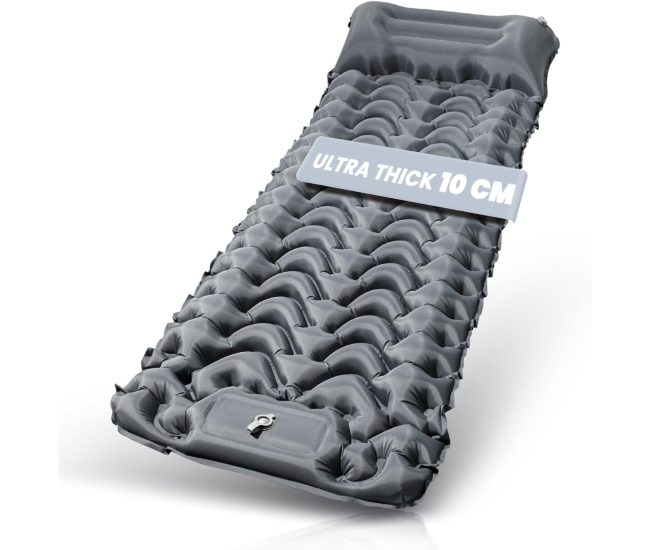
Whether someone enjoys camping or merely endures it usually comes down to how they slept. A thin foam roll transmits every stone and root; ten centimetres of air does not. At 198 x 70 cm this is a genuine single bed rather than the slightly-too-short mat that leaves tall people with cold feet hanging off the end.
The detail that matters most is the built-in foot pump. Inflating a thick mat by mouth is a miserable way to finish a day of driving, and it puts moisture inside the mat that you regret later. Here you stand and pump with a foot while looking at the view. Reinforced seams on 20D nylon address the usual complaint, which is waking up on the ground at 3 am.

Zipping two single bags together is the classic camping compromise and nobody actually likes it. There is a cold ridge of zip down the middle and a draught wherever the two shapes disagree. This is one bag built for two people from the start, at 155 x 230 cm, with a rectangular cut that lets you turn over and sleep how you normally sleep.
It also comes apart. Unzip it fully and you have two separate sleeping bags for the trips you take individually, or open it right out for two queen-sized blankets. Two pillows are included with proper plush filling rather than as a token gesture, and the compression sack has a wide opening so repacking in the morning is not a wrestling match.

Most people spend real money on a sleeping mat and then use a rolled-up jumper as a pillow. It is the cheapest fix in camping and the one everyone skips. This inflates in a few breaths through a one-click valve and is contoured to support your head and neck whether you sleep on your back or your side.
The cover is the part that makes it worth having. It is breathable cotton, removable and washable, so it feels like fabric rather than the slippery plastic pillows that slide out from under your head at the first turn. Underneath, a separate internal layer targets the usual failure of inflatable pillows, which is going slowly flat somewhere around 2 am.
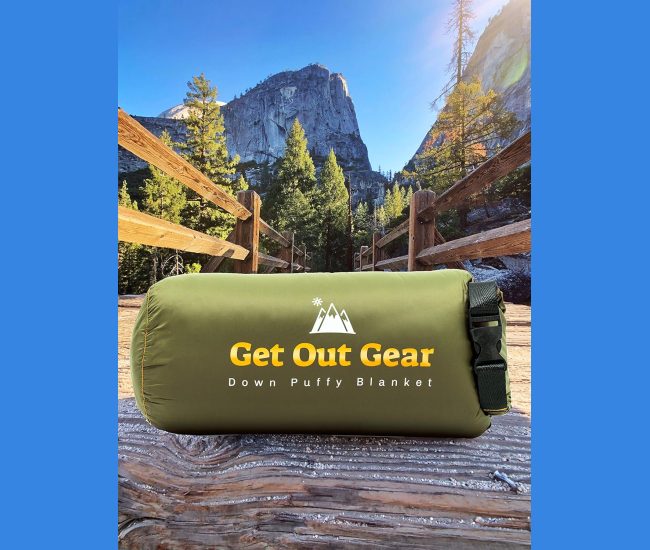
Blankets sold for camping are usually fleece, which is warm right up until it gets damp and takes up half a pack regardless. This one uses 650 fill power down inside a ripstop nylon shell, which is sleeping-bag construction rather than picnic-rug construction, and it weighs about half a kilo.
A water-repellent coating means dew, spilled wine and light rain bead off instead of soaking in, and the nylon sheds sand in a way fleece never will. Opened out it is roughly 200 x 137 cm, enough for two people sitting at a fire, and snaps let you wear it as a poncho so your hands stay free. Because it packs so small it tends to live in a car boot and get used constantly.
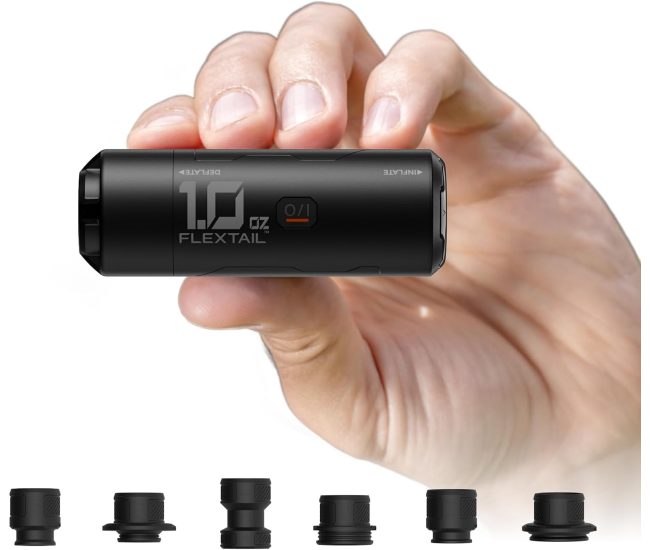
This is the point where camping gear becomes slightly ridiculous in the best possible way. The pump is about the size of your thumb and weighs roughly 28 grams without its battery, which is less than most people's keys. It still moves 200 litres a minute, so a sleeping mat is inflated in a couple of minutes while you get on with setting up.
The battery detaches and charges over USB-C, which means a spare can come along on longer trips rather than hoping one charge lasts the week. A set of nozzles covers sleeping pads, pool floats and beach toys, so it earns its keep well beyond camping. Anyone who has spent a holiday afternoon inflating things for children will understand immediately.
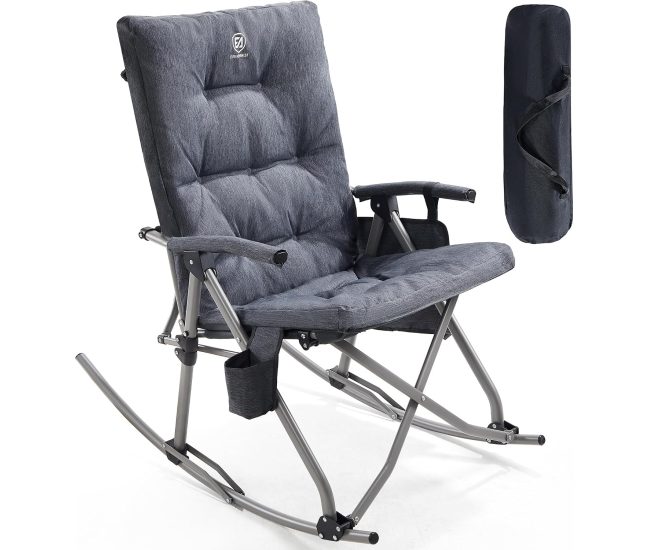
Most camp chairs are something you put up with. This one rocks, which changes an evening by the fire entirely. A powder-coated steel frame and a padded seat make it something you can genuinely spend hours in, and it is rated to around 180 kg, so there is no quiet doubt about whether it will take someone.
The hard armrests are the detail worth knowing about. Soft fabric arms give you nothing to push against, which makes getting out of a low chair awkward, so rigid arms suit larger people and older campers far better. There is a cup holder and side pockets, it folds into a carry bag, and at about 8 kg it is made for driving to a site rather than carrying any distance.
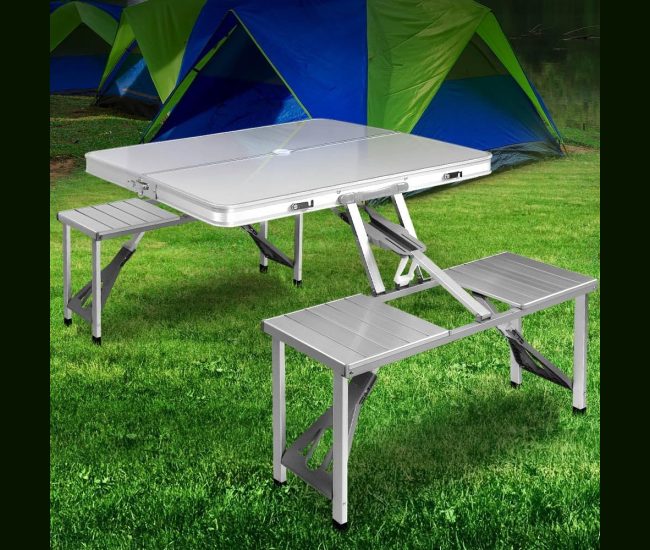
There is a stage of camping where everyone accepts that dinner happens on laps and eskies. This quietly ends it. The table sets up at 85 x 66 cm with four attached seats, which is a proper table for four rather than a shelf people take turns at, and the top is rated to around 35 kg so it takes a full spread without wobbling.
Folded it drops to roughly 85 x 33 x 10 cm with everything still connected, so there is no bag of loose legs and no assembly puzzle in failing light. It opens and closes in one motion. The only thing worth checking before buying is boot space, because while it packs impressively flat it is still 85 cm long.

Some people camp in order to walk twenty kilometres before lunch. Others camp to find two suitably spaced trees and remain there. This is firmly for the second group, at around 3 m by 2 m of parachute nylon with triple-stitched seams and a capacity near 300 kg.
Crucially the straps are included, which is the usual disappointment with a gifted hammock. Two tree straps with eight loops each plus steel carabiners mean you adjust the height and sag without knots or guesswork. It packs into its own attached bag, so nothing gets lost, and it doubles as a picnic rug, a shade cover or a wind break. It does need two solid anchor points, so give their campsite a thought first.
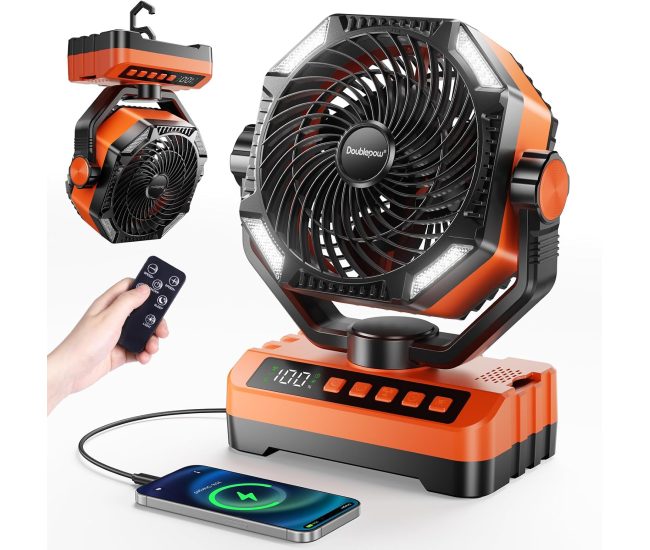
Anyone who has camped through an Australian summer knows the specific misery of a tent still holding the day's heat at ten at night. A 20,000 mAh battery runs this for somewhere between 12 and 40 hours depending on speed, which covers a long weekend with no power source anywhere near.
Five speeds take you from gentle air movement to a real breeze, and it oscillates automatically while the head swivels, so you can cool a whole tent or aim it at one person who runs hot. A 24-bead LED light means it doubles as the tent's ceiling light, and the display shows battery, speed and timer so you are never guessing. The remote sounds like a gimmick until you are horizontal and comfortable.

The moment you try to cook, find a peg or read a map while holding a torch in your teeth, head torches stop being optional. This one weighs about 50 grams without batteries, which is light enough to forget you are wearing. High and low beams cover most jobs.
The red mode is the one people overlook and then swear by, because it lets you move around camp without ruining your night vision or waking everyone in the tent. It runs on AAA batteries rather than a built-in cell, which sounds old-fashioned until a rechargeable torch dies on night two and cannot be fixed. Around ten hours on low, IPX4 water resistance, and a head that tilts to point at your feet.
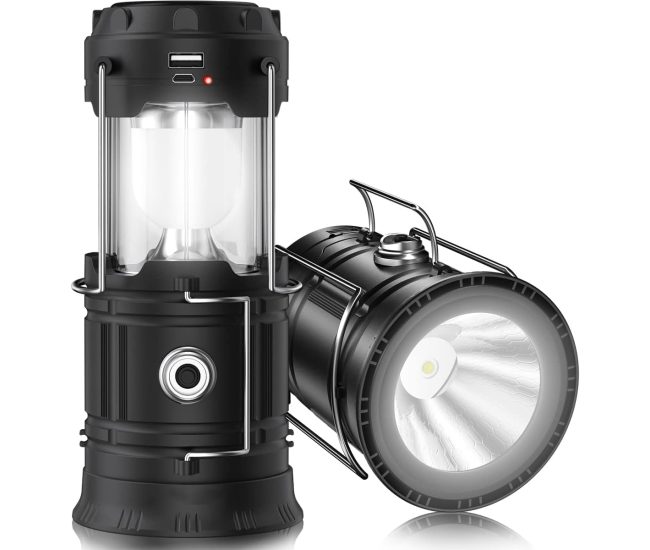
Gear that charges only one way has a habit of being flat exactly when it matters. This takes a USB charge before you leave and tops itself up from the sun while you are out, which covers both the organised version of you and the one who left in a hurry.
Collapsed it is a flat disc, pulled open it is a lantern, and the folding design lets it work as a directional torch too. A USB output will put some charge back into a phone, which will not run a device all weekend but is very welcome when a map or a call suddenly matters. It also justifies itself the first time a storm takes the power out, which in much of Australia is not hypothetical.
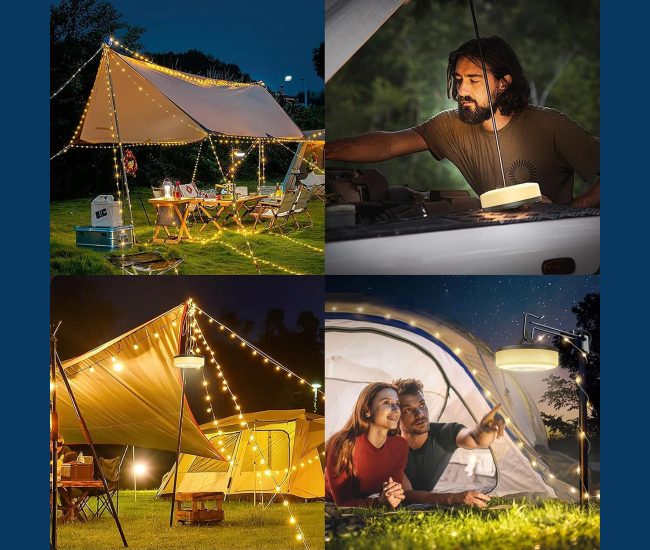
A head torch gets you around a campsite. String lights turn a patch of dirt into somewhere people want to sit. You get ten metres here, enough to run along an awning, over a gazebo or through a tree, and the warm white setting is genuinely warm rather than the hard blue-white of cheap LEDs.
The clever part is that they wind back into their own case on a hand reel, so they come out next time usable instead of as a knot. That single feature is the difference between lights that get packed every trip and lights that get used once. They double as a lantern, weigh about 200 grams, and being waterproof and USB rechargeable they can stay out in weather.

Camp kitchens evolve badly. One pot, then a mug nobody admits to owning, then a fork from a service station. This replaces the lot in one go: a 1.7 litre pot, a 1.1 litre kettle, a seven-inch non-stick pan, two cups, two plates and two sets of cutlery.
Having a separate kettle is the part people underestimate, because it means a cup of tea does not have to queue behind the pasta water. Everything is hard-anodised aluminium, which heats quickly and keeps weight down, and the whole set nests into a mesh bag at around 1.25 kg. The mesh matters on the way home, letting things dry rather than being sealed in damp.
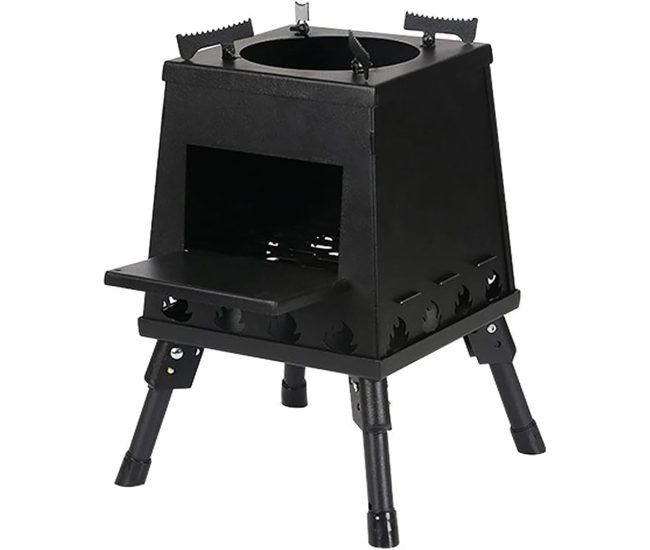
Gas canisters run out, usually with half a meal still to cook, and they have to be carried both ways. A rocket stove burns what is already lying around: sticks, charcoal, dry grass. You gather fuel as you go and stop thinking about cartridges entirely, which is a different relationship with cooking outdoors.
The design does the work. Ventilation slots feed air into a tall chamber, producing a concentrated efficient burn rather than a smoky open fire, so a surprisingly small handful of sticks gives real cooking heat. A wide front door lets you add fuel without lifting the pot, and the legs fold for packing. Worth checking local fire restrictions, since solid fuel is banned in much of Australia for part of the year.
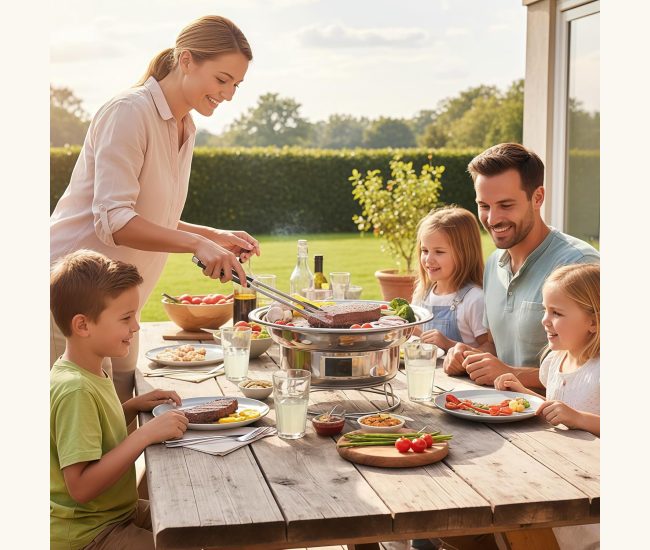
This is not simply a small barbecue. It arrives with a charcoal bowl, a burning plate, a roasting pan, a mesh and a pot stand, so it works as a straightforward grill, as a Korean-style tabletop barbecue where everyone cooks their own, or as a stand to boil a pot on.
At around 35 cm across it is scaled for a table rather than a backyard, which makes it right for a campsite, a balcony or a courtyard where a full barbecue would be absurd. Twin side vents let you control the heat rather than simply apply it, and the whole thing comes apart for cleaning, which is what stops it becoming the greasy object nobody wants in the car.

Toast at a campsite usually means holding bread over a flame in a pan and producing something black on one side and raw on the other. This sits on a burner and spreads heat up through four slices at once, so everybody eats at the same time instead of in shifts.
Set up it is nine inches across and folds down to roughly the thickness of a dinner plate, so it slides into a camp kitchen box and takes no real space. There is nothing to break, no coating to flake and no parts to lose, which is why the design has barely changed in decades. It does need a camp stove or gas burner to sit on, so check they have one.

There are two kinds of camp cook: the one who accepts that everything will taste faintly of salt and smoke, and the one who brings seasoning and quietly produces the best meal of the trip. This is for the second, and it turns a rattling bag of supermarket jars into something you can actually find things in.
Nine food-grade jars sit in individual compartments in a waterproof wax canvas roll, so nothing leaks into the esky and nothing gets lost. You also get 21 printed labels plus blanks, and a collapsible funnel for refilling. If you want to go further, fill the jars with their actual favourites before wrapping it, which turns a useful kit into a gift they can use that weekend.
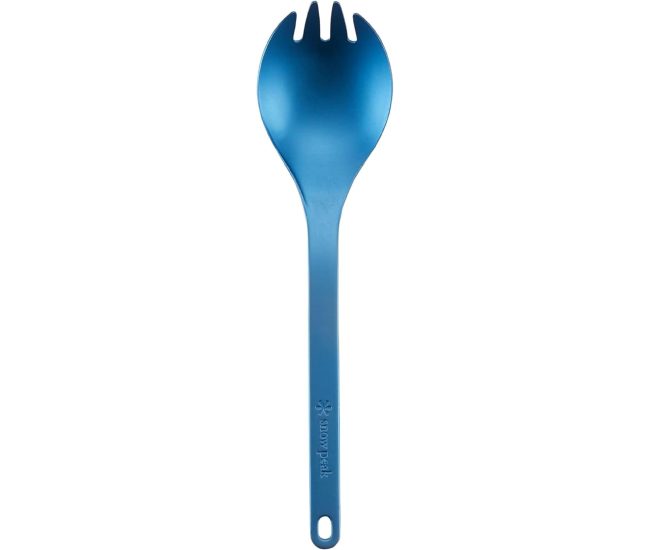
You have probably snapped a plastic spork in a pot of something hot, and possibly carried a steel one heavier than the meal. Titanium sidesteps both: stronger than steel at a fraction of the weight, and it simply does not corrode, so it will not pick up a metallic edge after a season.
Spoon one end, fork the other, one piece of metal between. There is nothing to break because nothing moves. Snow Peak have been making outdoor gear for sixty years and build things to be kept rather than replaced, and the anodised finish resists the marking that makes cheaper cutlery look tired. It is an excellent present when you want something small that is not cheap.
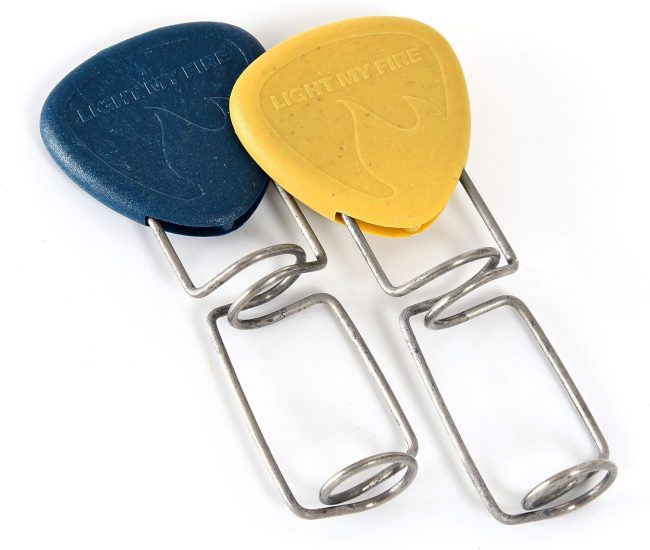
Telescopic roasting forks are long, awkward to pack and somehow always one short when friends arrive. These solve it differently: two stainless prongs that clip onto practically any stick on the ground, so the handle is free, the right length and sourced on arrival.
That makes them tiny to pack, which is the entire point, and they end up living permanently in a camp box. They handle marshmallows, snags and bread, and the fork doubles as a poker, which will honestly be its most-used job. BPA-free and dishwasher safe, so burnt marshmallow does not become someone's evening. Pair with a bag of marshmallows and it is a complete gift.

Steel fire pits warp, scale and eventually rust through. Titanium does not, which is the whole reason this exists and the whole reason for the price. It assembles from panels without tools and comes apart again, so it packs flat rather than occupying a boot corner as a bucket of ash.
More than 150 air holes feed the fire from below and around the sides, which gives a fire that lights easily and burns cleanly instead of smouldering and smoking everyone out of their chairs. At about 5.5 kg it is light for its size. Keeping fire off the ground is increasingly required at Australian campgrounds too, so it is practical as well as indulgent.

There is a kind of walker who reads a map looking for creeks rather than cafes, and this is their gift. The filter is built into a straw, so you drink straight from a creek, a tank or a doubtful campsite tap and the filtering happens on the way up. No pumping, no waiting, no tablets fizzing while you wonder if you waited long enough.
It filters to 0.2 microns, removing at least 99.9999% of waterborne bacteria and 99.9% of protozoa, with no batteries, moving parts or chemicals. One unit handles up to 4,000 litres, which for most people is years of weekend walking. Worth knowing it targets bacteria and protozoa rather than viruses or chemical contamination, so check it against where it will be used.

Every other piece of gear is a preference. Water is the constraint that decides where you can actually camp. Carrying nineteen litres means taking the quiet site with no tap rather than the crowded one with facilities, and it stops the day being planned around where you can refill.
It is thick food-grade plastic built to be slid around a boot, and the tap and sealing cover are designed not to weep, which sounds like a low bar until you have driven two hours with water slowly emptying into the camping gear. Dual handles and shoulder straps make it carryable, and the spout is wide enough to get a hand inside to clean. Nineteen litres weighs nineteen kilos, so pack it low.

A hard esky is excellent until you have to carry it somewhere. The good picnic spot is up a hill, the fishing spot is along a track, and the beach is a long way from the car park. Thirty litres on your back instead of in one hand changes which places are realistic.
The seams are heat-pressed rather than stitched, which is the detail that separates a good cooler bag from a disappointing one, because melted ice stays inside rather than finding your back halfway up the hill. Eight millimetres of foam keeps things cold for around 12 hours, and separate dry pockets mean your phone and keys are not swimming with the drinks. Frozen bottles work better than loose ice.
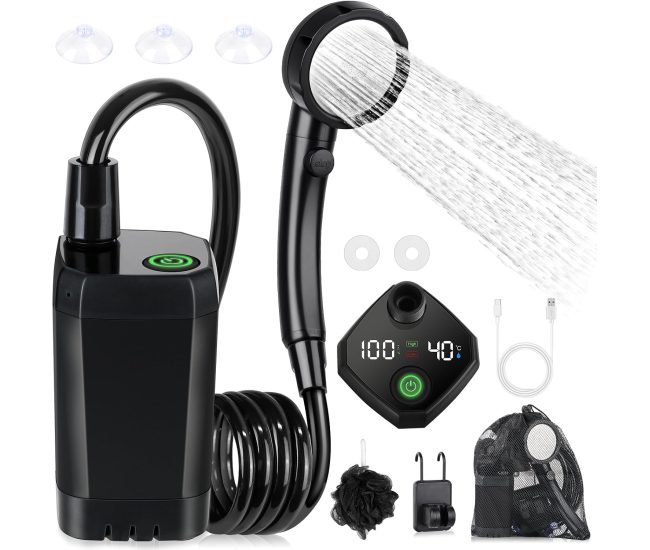
The usual options for washing at a remote site are a solar bag that is either freezing or scalding, or a water bottle and a lot of optimism. This is a small electric pump you drop into a bucket, a jerry can or a creek, with a shower head on the end of a hose.
A 6000 mAh battery runs it for roughly two to two and a half hours, which is many showers rather than one, and it charges over USB-C like everything else they own. Four spray modes and adjustable output let you go gentle to make water last or firmer to rinse off sand properly. A filter on the intake catches grit. It pumps water but does not heat it, so warm the water first.
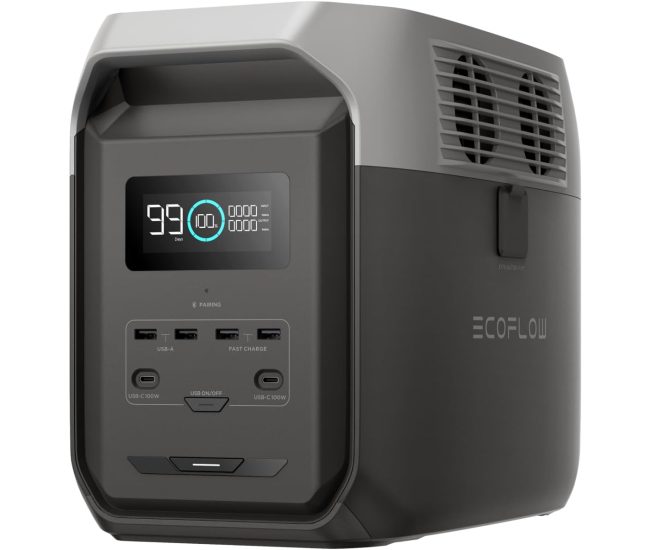
This is where portable power stops being a top-up and becomes a supply. At 1536 Wh it will run a camping fridge for days, charge every device a family owns and handle a kettle, with 1800 W of output and up to 2200 W boosted. It covers most of what people actually plug in.
What separates it from a generator is the silence. Under 600 W it runs at around 35 dB, which disappears into ambient bush noise, so it can sit inside an annexe without anyone resenting you. It recharges fully in about 90 minutes, and a UPS switchover under 15 milliseconds means it keeps computers and medical equipment alive through a blackout at home — often the real justification.

Modern camping has an awkward dependency: the maps, the camera and the torch all live on things that need charging. A 28 W folding panel removes the limit. It opens out on a car roof or the back of a pack and turns a bright afternoon into more battery, with three ports so a phone, a power bank and a head torch charge at once.
Efficient N-type cells convert up to around 25.3% in good sun, and it folds flat enough for a pack and is built to be rained on, which is not true of every panel sold for this. Be honest when you give it: cloud and shade cut output a lot, so it is a dependable top-up rather than a wall socket. Paired with a power bank it becomes genuinely reliable.

Most multi-tools hand you a blade and leave fire to something else in another pocket. This puts a flint wheel on the tool itself, with spare flint storage and a tinder grater, so everything needed to get a fire going travels as a single object.
That matters at exactly the moment it usually goes wrong, standing in wind with cold hands hunting for the lighter you packed somewhere sensible. Alongside it you get a 420 high-carbon steel blade, a double-cut saw, a flathead screwdriver and a bottle opener. The saw is the underrated inclusion, because preparing kindling properly rather than snapping branches is the difference between a fire that lights and an evening of frustration.
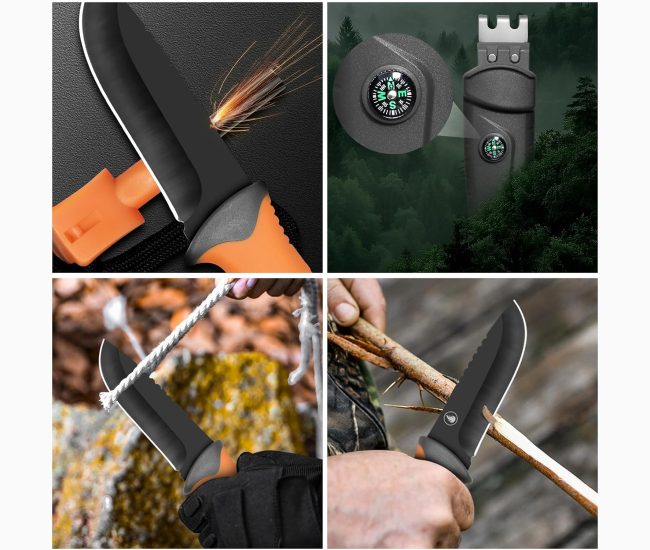
The knife is the obvious part, but the sheath is why you would pick this one. Built into it are a compass, a whistle, a sharpener and a magnesium fire starter, so four things that would otherwise live in four pockets travel as one object on a belt.
Small survival items have a habit of being elsewhere when wanted, and keeping the fire starter attached to the knife already in your hand works far better than a kit in a tin at the bottom of a pack. The blade is 4Cr13 stainless, easy to bring back to an edge, and at about 123 grams it wears all day. Knife laws vary by state, so it belongs with camping gear rather than a day pack.
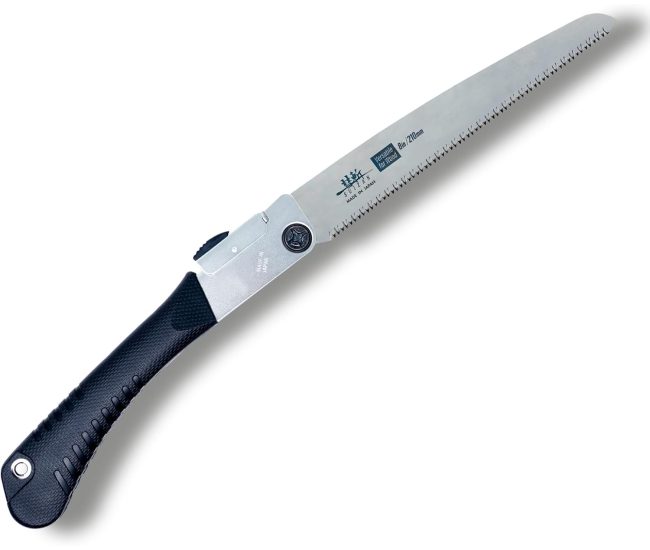
Western saws cut as you push, so the blade must be thick enough not to buckle. Japanese saws cut as you pull, so the blade can be thin and genuinely sharp. This one is 0.75 mm thick, and the first cut is a small revelation because you stop fighting the wood.
Folded it is 240 mm and 235 grams, so it disappears into a pack pocket, and open it gives 445 mm of leverage, which is enough to work properly rather than being a novelty. The blade angle adjusts for awkward cuts and the blades are replaceable, making it a long-term tool. Fair warning worth passing on: it is much sharper than people expect from a folding saw.

A beach towel in a pack is a mistake you make exactly once. It absorbs half the moisture in the tent, takes two days to dry and smells distinctly of pond by Sunday. Microfibre holds more water for its weight and then dries in a fraction of the time, which is the entire argument.
At 50 x 100 cm this is a proper body towel rather than the postcard that forces you to dry one limb at a time, and it still vanishes into a corner of a daypack. The weave is suede-feel rather than the slightly plasticky texture of cheaper quick-dry towels. Standard advice applies: wash it alone first and skip fabric softener, which coats the fibres and ruins the absorbency.

The line is braided so it grips clothes in its own twists, which means no pegs to bring, drop or watch blow into the scrub. You push a corner of fabric between the strands and it stays put even when the wind gets up.
That removes the most irritating part of doing washing on a trip, and anyone who has chased a sock across a caravan park will see why something this cheap gets used so much. Five metres with a stainless hook at each end lets you string it between trees, awning poles or across a cabin shower, and it holds wet jeans and towels rather than only t-shirts. It packs down to roughly the size of a bread roll.
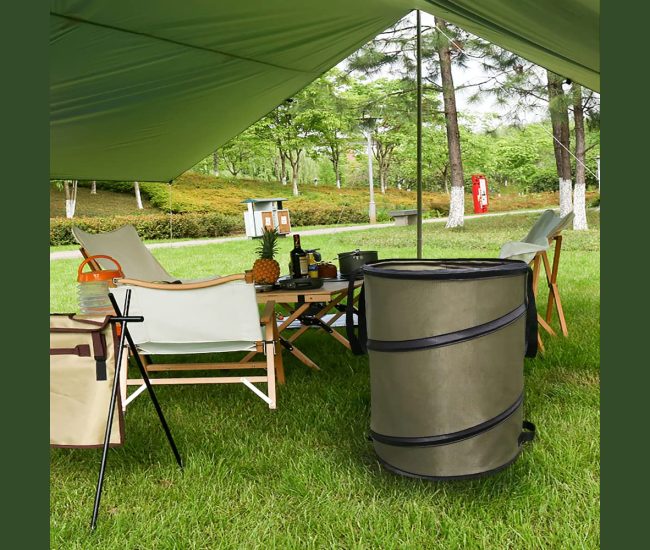
Rubbish at a campsite is handled badly nearly everywhere: a supermarket bag tied to a chair, over in the first decent gust, then half an hour spent chasing packaging through the scrub. These fix that for the price of a couple of coffees.
Each springs open on a steel spiral to about 38 litres and stands up by itself, and two in the pack means rubbish and recycling stay separate instead of being sorted at home. Folded they go down to roughly 2 cm, so they slide behind a seat and cost you nothing in space. Oxford cloth with double-stitched handles takes a full load, and they wipe out rather than being thrown away.

Disposable warmers take twenty minutes to get going and then go in the bin. This is warm in about three seconds and charged again afterwards, which is better on every count. Two heat settings let you run it gently through a long morning or turn it up when your hands have genuinely stopped working.
You get around four hours on low and three and a half on high, which covers a cold dawn start or an afternoon on a sideline. When hands are warm enough it goes back to being a battery and will charge a phone, which makes it much easier to justify carrying. Under 100 grams, so it disappears into a coat pocket. Charge it before you wrap it.
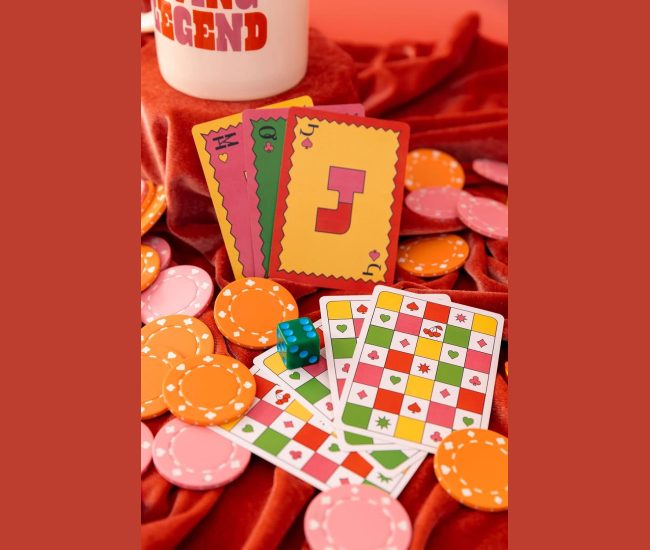
Every camp box eventually holds a deck with four cards missing, three stuck together and one that has clearly been rained on. These carry a waterproof coating, so a spilled drink, an afternoon shower or an hour at the beach does not retire them.
They shuffle and deal like proper cards rather than the stiff plastic novelty decks that fight you every hand, and the hard case instead of a cardboard box is why this deck will still be complete in two years. Small enough to live in a glovebox, a boat or a beach bag, and cards are the most reliable entertainment there is when the weather turns and everyone is stuck under an awning.

Binoculars tend to be either powerful and bulky or pocketable and disappointing. These sit usefully between: 12x magnification through a 25 mm lens in a body you can hold and focus one-handed, with a field of view wide enough to find what you are looking at rather than hunting for it.
BAK4 prisms with multilayer coating is the specification that separates binoculars working at dawn and dusk from ones that only perform at midday, which matters since that is when wildlife is worth watching. The eyecups fold down so glasses wearers see the full image, a detail overlooked surprisingly often. Light enough that children can hold them steady, which is usually the real limit rather than magnification.
This is the question that decides everything else. Someone who drives to a site and unloads a boot can take a folding table, a rocking chair and a power station, and will be delighted. Someone carrying everything on their back counts grams and will quietly resent anything bulky, however thoughtful. A caravanner is different again, with power available and space at a premium. Work out which of the three they are before you look at anything else, because it rules out half this list immediately.
Whether someone enjoys camping is decided almost entirely by how they slept. If they are still on a thin foam roll and a rolled-up jumper, a thick mattress and a proper pillow will do more for them than any amount of clever gear. For someone whose back has started ending trips early, an off-ground cot changes what is possible. Warmth comes from what is underneath you as much as what is over you, so a mat matters more than a sleeping bag rating suggests.
The things that actually limit a trip are rarely gear. They are how much water can be carried and whether the devices stay alive. A large water container decides which campsites are realistic, and a filter straw or a solar panel removes a constraint rather than adding an object. These make unusually good presents because people put off buying them, and because they get used on every single trip rather than occasionally.
Camping gear has a habit of being bought and then left in the shed because it does not fit with everything else. A folding table is 85 cm long even packed flat, a cot and tent together take more room than a tent alone, and a rocking chair at 8 kg is a car-camping item. None of that is a flaw, but it is worth a thought about the vehicle it has to live in. For hikers, reverse the question entirely and look at the lightest things here.
For gifts being delivered in Australia, check the retailer's current delivery estimate, seller details and total cost before committing to a present for a particular date. Confirm anything needed before first use: batteries for a head torch, a stove for cookware or a toaster, charging time for a fan or power station. Most importantly, check fire restrictions where they camp, because solid fuel fires and fire pits are banned across much of the country for part of the year.
Looking for another idea to suit the way they spend their weekends? These collections are useful places to keep looking:
Look at the parts of a trip people put up with rather than fix. A pop-up bin, a pegless clothesline, a quick-dry towel, a puck of water minerals or a decent camp toaster all solve small recurring irritations that nobody buys for themselves. The other reliable approach is to upgrade something they own but have never replaced, like swapping a snapping plastic spork for a titanium one or a rolled-up jumper for a real pillow.
Plenty, and some of the most-used things here sit in that range. A head torch, a microfibre towel, a pegless clothesline, waterproof cards, a solar lantern, a camp stove toaster or a pop-up bin set all cost less than a tank of fuel. Our gifts under $20 guide has more if the budget is tighter.
Buy comfort rather than equipment. A first trip usually fails on a bad night's sleep, not on a missing gadget, so a thick inflatable mattress, a proper pillow and a head torch will do more than anything clever. A pop-up tent removes the other classic first-timer experience, which is assembling poles in the dark while everyone watches. Avoid anything that assumes they already own a stove, a machine or a particular setup.
A double sleeping bag that separates into two singles is the obvious one, and better than zipping two bags together. Beyond that, a two-person hammock, a folding table with seats or a packable down blanket all suit two people sharing a trip. For couples who camp in summer, a rechargeable fan is less romantic and considerably more appreciated.
Weight decides it. The titanium spork, the water filter straw, the inflatable pillow, the thumb-sized air pump and the folding saw are all built for carrying. Avoid tables, cots, fire pits and power stations, which are excellent gifts for car camping and completely wrong for a pack.
You can explore every idea in this guide through its individual Unique Gift Ideas product page, then follow the retailer link to check the current offer. The BBQ & Outdoor collection and Travel Gifts are both good places to keep looking. Check delivery to your Australian address and the estimated arrival date, particularly when buying for a birthday, Father's Day or Christmas.
The best camping gift fits the way someone already camps rather than the way camping looks in a catalogue. For one person that is a cot that gets them off the cold ground and makes weekends possible again. For another it is a ten dollar clothesline that ends a small weekly annoyance, or a titanium spork they will still own in twenty years.
Work out whether they drive to a site or carry everything, fix the sleeping before buying anything clever, and remember that water and power decide where a trip can actually go. Check the fire rules where they camp, and pair equipment with whatever makes it usable on the first night, whether that is batteries, a bag of charcoal or a box of marshmallows.
Explore more clever, creative and giftable finds at UniqueGiftIdeas.com.au.


